The year is 1939. A farmer, sweat beading on his brow, finishes a day of backbreaking labor, his muscles aching from hours spent plowing his fields with horses. He watches, captivated, as his neighbor effortlessly maneuvers a sleek, new Ford 9N tractor, its three-point hitch a marvel of simple, yet revolutionary, engineering. This wasn't just a machine; it was a harbinger of a new era in agriculture. This story explores the evolution of Ford tractors, from humble beginnings to the powerful giants that followed, examining how their design impacted—and continues to impact—sustainable farming practices. While a definitive "largest" Ford tractor is debatable depending on the metric used (engine power, overall size, etc.), the company's legacy extends far beyond sheer size. For more details on Ford's agricultural innovations, see this site.
From Humble Beginnings to Powerhouses: The Evolution of Ford's Agricultural Machinery
The Ford 9N's success wasn't solely due to its power; its innovative three-point hitch (a system for easily attaching implements) dramatically increased efficiency. This seemingly small detail had a massive impact, making farming less arduous and more productive – crucial factors in sustainable farming. But how did successive models build on this success? The Ford 6000 series represented a significant jump in size and power, promising increased yields. Yet, its innovative Selecto-Speed transmission, while technologically advanced, proved problematic for some, highlighting the importance of reliability alongside power. This underscores a crucial point: sustainable agriculture demands not only high output but robust, dependable machinery.
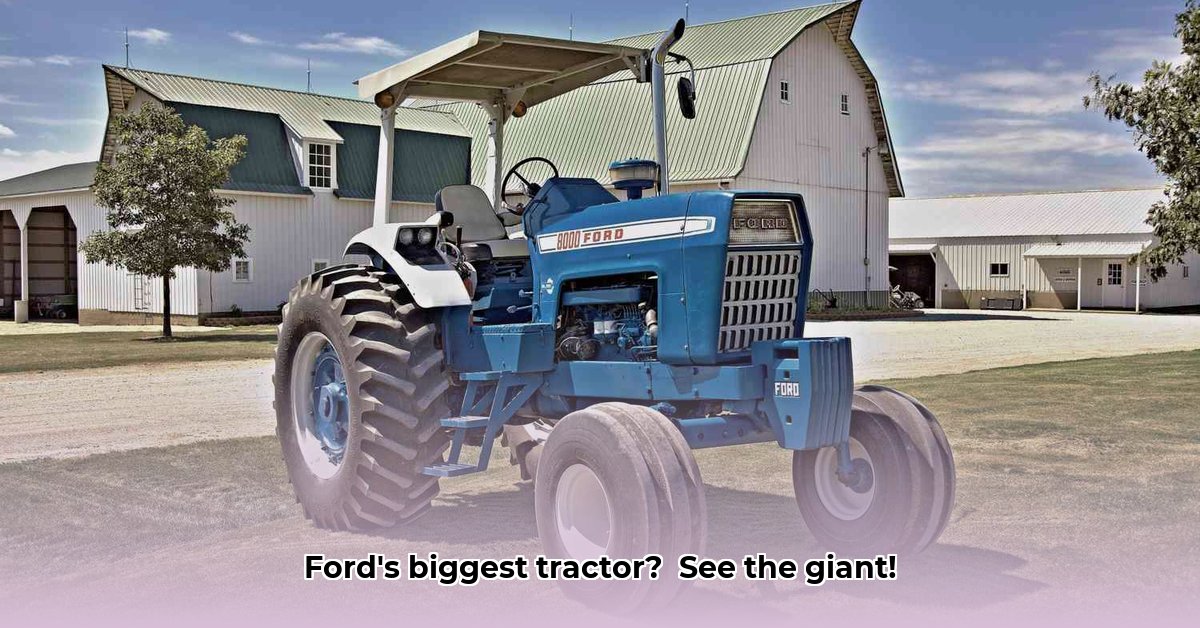
The Ford 8000 series further amplified power, responding to farmers' demand for increased output. However, this significant increase in size and power came with a trade-off: higher fuel consumption. This leads to a critical question: does the increased productivity outweigh the environmental cost? Sustainable farming demands a balanced approach, minimizing environmental impact alongside maximizing yields. Increased fuel consumption is a direct correlation with amplified engine sizes in larger machinery.
The Quest for Optimality: Redefining "Best" in Agricultural Technology
So, what constitutes the "best" tractor? Is it simply raw power, represented by a machine's size and horsepower? Or is it a more nuanced equation considering efficiency, reliability, and environmental responsibility? Ford's history provides a compelling lens through which to examine this question. While the company produced undeniably impressive, large tractors, their history also exemplifies the challenges of balancing power with sustainability. Modern sustainable agriculture requires a holistic approach, incorporating efficiency, resource conservation, and reduced greenhouse gas emissions – considerations that weren't always prioritized historically.
Comparing the Giants: A Closer Look at Key Ford Tractor Models
The following table provides a comparison of key Ford tractor models; note that these are generalized assessments, and individual experiences may vary:
| Model | Approximate Horsepower | Key Features | Reliability (General Perception) | Fuel Efficiency (General Perception) | Environmental Impact (General Perception) |
|---|---|---|---|---|---|
| Ford 9N | 20-30 | Three-Point Hitch, Simplicity of Design | High | High | Low |
| Ford 6000 Series | 60-100 | Selecto-Speed Transmission, Increased Power | Moderate | Moderate | Moderate |
| Ford 8000 Series | 100+ | Significant Power Increase, Advanced Features | Moderate | Lower | Higher |
Ongoing research continues to refine our understanding of the long-term environmental impact of various tractor models and farming practices.
A Legacy of Innovation: Ford's Enduring Impact on Sustainable Farming
Ford's legacy in agriculture is complex. It's a story of innovation, of engineers responding to farmers' needs, and the continual evolution of agricultural technology. But it's also a narrative about the ongoing dialogue regarding sustainability. The pursuit of the "largest" Ford tractor is less about sheer size and more about understanding the impact of technological advancements on global food production and environmental concerns. The journey from the simple 9N to the powerful 8000 series exemplifies both the successes and challenges of balancing agricultural output with environmental responsibility.
How Ford Tractor Designs Shaped Sustainable Farming Practices
Key Takeaways:
- Ford tractors dramatically increased agricultural efficiency, initially improving accessibility and profitability.
- The durability of Ford tractors fostered a robust secondary market for parts and repairs, extending the lifespan of machinery and minimizing waste.
- The current repurposing of Ford tractor scrap in specialized yards promotes resource recovery and aligns with sustainable agricultural practices.
- This circular economy approach minimizes environmental impact while offering cost-effective maintenance options.
Early Innovations: Efficiency and Accessibility
Ford's initial impact on sustainable farming practices was largely through improved efficiency. The affordability and ease of use of early models meant widespread adoption, resulting in increased productivity with less reliance on manual labor, reducing human resource strain and environmental impact.
The Rise of Larger Tractors: Scale and Specialization
Larger tractors led to the cultivation of larger fields, generating further efficiency gains. However, this came with higher fuel consumption. The design versatility of these machines, allowing for various attachments, reduced the necessity for multiple smaller specialized machines, but the overall environmental impact remained dependent on other factors like fuel efficiency and farming techniques.
Durability and the Secondary Market: Extending Machine Lifespans
The robust build of Ford tractors contributed directly to sustainability by extending their lifespans. Repairs using parts from the secondary market minimized waste and reduced the demand for new manufacturing, therefore reducing the environmental impact.
The Modern Legacy: Scrap Yards and Resource Recovery
Specialized scrap yards for Ford tractors are now integral to sustainable practices. They offer affordable replacement parts, extending the life of older tractors, and supply materials for new components – a functioning circular economy that minimizes the environmental impact of tractor manufacturing.
Looking Ahead: Sustainable Agriculture and Ford's Ongoing Influence
The story of Ford tractors and sustainable farming is a constantly evolving narrative. While early models lacked fuel efficiency, their role in increasing farm output is undeniable. Today, the secondary market and the rise of sustainable scrap yards demonstrate how a focus on durability unintentionally contributes to modern sustainability efforts. The ongoing quest for more efficient and environmentally friendly agricultural technology continues to build upon this legacy.